

Legislation on telephone solicitation with lead generation
Cold calling, a ubiquitous practice in the world of lead generation, sparks passionate debates regarding its ethical and legal implications. As companies seek to optimize their marketing strategies to reach potential customers, the legislation surrounding this prospecting method is becoming increasingly complex.
In many countries, strict laws have been put in place to protect consumers from intrusive and unsolicited calls, thus guaranteeing their right to privacy. These regulations aim to strike a balance between the commercial interests of businesses and the legitimate expectations of consumers.

Towards a ban on intrusive calls by 2025
Lead generation via callback request forms not only complies with current legislation, but it is also an effective strategy for creating an authentic connection with prospects, while minimizing the risks associated with telephone canvassing.
First, by using callback request forms, companies establish a clear consent process. Prospects, by voluntarily filling out these forms, express their interest in the products or services offered. This not only ensures a targeted and personalized approach, but also respects the principles of personal data protection, in accordance with the GDPR. By obtaining users' explicit consent, companies avoid potential penalties related to intrusive marketing practices.
Furthermore, French legislation, which provides for increasing restrictions on telephone solicitation, aims to protect consumers from unsolicited calls. From 2025 onwards, the legal framework could become even more restrictive, making this prospecting method less viable for many companies. On the other hand, lead generation through forms is part of a proactive and positive approach where the prospect takes the initiative to contact the company, thus reducing the legal risk associated with solicitation.
Understanding the legislation on door-to-door sales.
The legislation governing door-to-door sales aims to protect consumers by guaranteeing their informed consent before any commercial interaction. Businesses must ensure they have a clear and explicit consent form when personal data is collected for lead generation. This approach not only ensures compliance with legal requirements, but also fosters a relationship of trust between companies and their potential customers, thereby strengthening brand reputation and integrity in the market.
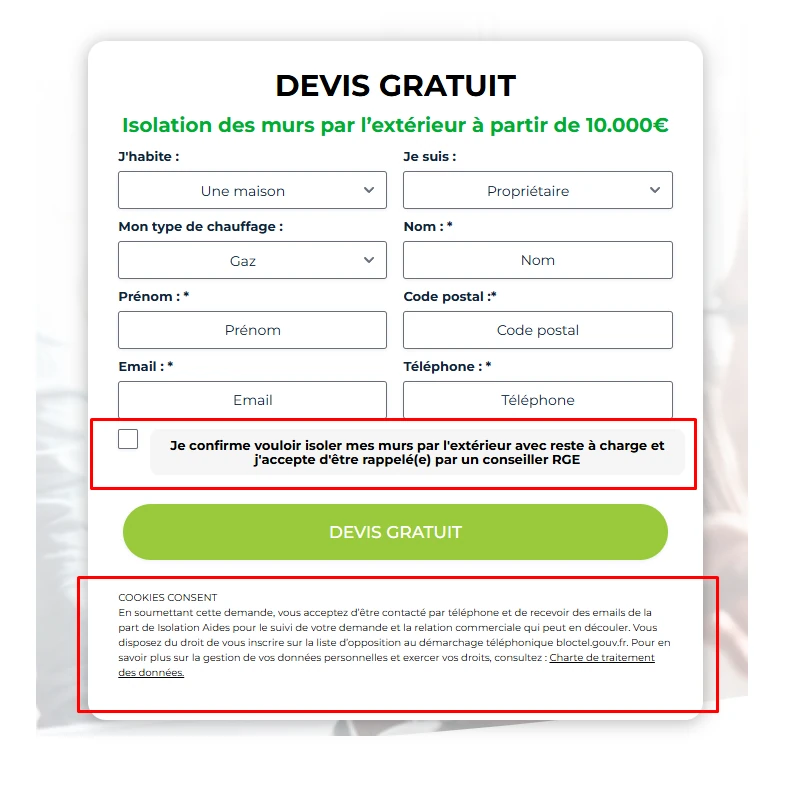
Finally, this method also allows companies to better qualify their leads. The data collected through forms can provide valuable information about prospects' needs and expectations, thus facilitating more effective follow-up and potentially higher conversion rates.
Importance of the consent form.
The consent form plays a crucial role in marketing, as it provides the legal basis for businesses to contact consumers while complying with applicable legislation. By incorporating transparent practices, this form assures potential customers that their personal data will be used ethically and responsibly. This not only strengthens trust between the company and the consumer, but also contributes to the creation of a more qualified database, where Leads are more likely to convert into loyal customers.
Furthermore, a well-designed consent form allows businesses to gather relevant information about contacts' expectations and preferences. By leveraging this data, outreach strategies can be tailored to better meet the needs of potential customers. This personalization process offers a dual advantage: it maximizes campaign effectiveness while ensuring that business practices comply with legal standards, thus protecting companies against potential penalties.

Avoiding penalties through legislation.
Companies that comply with legislation regarding telephone marketing, particularly concerning informed consent, can avoid heavy financial and legal penalties.
By using appropriate forms to collect consumer consent, they ensure that each commitment complies with established standards.
This not only protects companies from potential lawsuits, but also improves their brand image by showing that they prioritize transparency and respect for customer privacy.
Ready to launch the campaigns?
Contact us
